Maths on the Move
Maths on the Move, is the podcast from plus.maths.org. We speak to researchers from the frontiers of mathematical science so you can connect with the maths that shapes and explains our world. Hosted by Plus editors Rachel Thomas and Marianne Freiberger.






Episodes
Dec 17, 2024
Dec 17, 2024
29 min
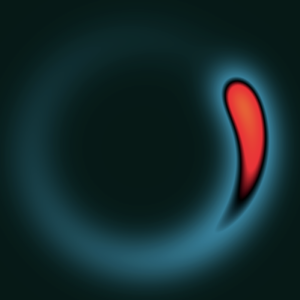
What is as hypnotising as a beautiful goldfish circling its bowl, but can help you understand the way a virus can spread? The answer is one of the beautiful interactive simulations produced by VisualPDE !
In this podcast we talk to Benjamin Walker from University College London, and to Adam Townsend and Andrew Krause from Durham University, who together created this online solver of partial differential equations. Such equations describe how quantities change over space and time and therefore used throughout science to describe processes that play out in the real world — from the transmission of airborne viruses to the flow of water during a flood. Ben, Andrew and Adam tell us about their motivation for building VisualPDE and what they can do with it.
We met Ben, Andrew and Adam through the Mathsci-comm network for people who communicate maths and data science to non-expert audiences. As you can see by playing with the simulation below, VisualPDE is a great tool for communicating maths research to non-experts, as well as allowing mathematicians to quickly simulate what their mathematical models can tell them.
Adam is also part of the team behind the brilliant Chalkdust, a magazine for the mathematically curious. Why not order the latest issue for a Christmas gift?
Play with the simulation!
Suppose that lots of people are sitting in a sealed room and one of them is infectious. We'll assume that the infectious person is constantly producing virus-laden particles that spread out around them and lose their potency over time. The simulation below shows what this might look like. The colour corresponds to the concentration or amount of the virus in the air.
With VisualPDE, we're not just limited to watching a simulation: we can interact with it too. Clicking in the room will introduce some viral particles to the air, as if someone with an infection had coughed (coughing is actually a lot more complicated and is the focus of lots of research). Try clicking to see what difference a cough can make.
Though each cough introduces some virus to the room, it looks like it quickly decays away until we can't even tell it was there. So, does this mean we shouldn't be worried about a cough?
To explore this further, let's look at the probability (or chance) of getting an infection, which is related but not equal to the virus concentration. Specifically, we'll look at the chance of catching the virus assuming that you'd been in the same location for the duration of the simulation. With VisualPDE, we can do this by switching to the Probability View by pressing and choosing "Probability".
Now for the goldfish. People don't always stay still in the middle of rooms. Unsurprisingly, the movement of an infected individual can have a big impact on the spread of a virus. The next simulation is set up so that the source of the infection moves around the room, as if they were a waiter going between tables in a restaurant, perhaps. The air conditioner is turned off, so that the air in the room is still.
The Probability View shows the build-up of a ring of likely infections as the infectious person circles the room. A quick look at the Concentration View shows their circular path, leaving a trail of viral particles behind them.
To find out more about this simulation and how to explore it, go to the VisualPDE site.
The two scientific papers mentioned in the podcast are:
Predicting the spatio-temporal infection risk in indoor spaces using an efficient airborne transmission model by Zechariah Lau, Ian M. Griffiths, Aaron English and Katerina Kaouri
Turing Instabilities are Not Enough to Ensure Pattern Formation by Andrew L. Krause, Eamonn A. Gaffney, Thomas Jun Jewell, Václav Klika and Benjamin J. Walker
Dec 10, 2024
Dec 10, 2024
25 min
Are you thinking of doing a Masters or PhD in maths or another STEM subject but are worried about funding? Then the Martingale Foundation might be for you. The Foundation's mission is "to enable and nurture talented individuals from low-socioeconomic backgrounds to thrive within world-leading postgraduate study and become STEM leaders" by providing full scholarships as well as a development programme.
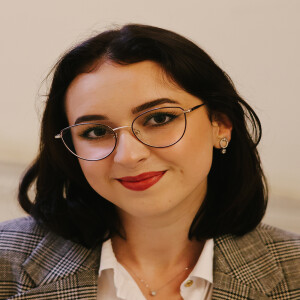
In this episode of Maths on the Move we talk to two current Martingale scholars, Alexandra Sorinca and Malachy Reynolds, who have both just started their PhD at King's College London. We met them this summer at Solve for X, a mathematical modelling retreat delivered by the Martingale Foundation in partnership with the Newton Gateway to Mathematics and the Isaac Newton Institute for Mathematical Sciences (INI), which challenged teams of students to solve real-life maths problems posed by industry. Solve for X is one of the activities the Martingale Foundation provides for its scholars. Alexandra and Malachy tell us about their challenges and also about what it's like being a Martingale scholar.
We also talk to Chloe Slevin, the Martingale Foundation's Communications Manager, who explains the Foundation's aims and gives useful advice for new applicants.
Alexandra Sorinca
Malachy Reynolds
Chloe Slevin
Dec 3, 2024
Dec 3, 2024
23 min
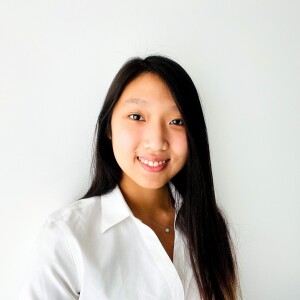
As a PhD student working with the Maths4DL research project, Yolanne Lee works on the mathematics that powers artificial intelligence. In this podcast she tells us about what she thinks AI will be able to do in the near future, what it has to do with cats and dogs, and how music provided her first experience of science. We also get to hear her play the piano!
To find out more about the topics discussed in this podcast see Artificial intelligence and deep learning: Your questions answered.
This content is part of our collaboration with the Mathematics for Deep Learning (Maths4DL) research programme, which brings together researchers from the universities of Bath and Cambridge, and University College London. Maths4DL aims to combine theory, modelling, data and computation to unlock the next generation of deep learning. You can see more content produced with Maths4DL here.
Nov 26, 2024
Nov 26, 2024
26 min
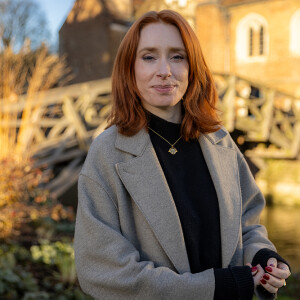
We're very excited that Hannah Fry is coming to join us in Cambridge in January 2025. Fry is a brilliant mathematician, best-selling author, award winning science presenter and host of popular podcasts and television shows. She'll be Cambridge's first Professor for the Public Understanding of Mathematics.
In this episode of Maths on the Move Hannah explains how her interest in public engagement grew directly out of her work as a mathematician, talks about how she got into maths in the first place, and shares one of her favourite mathematical moments.
We were very proud that Hannah announced the news at an event we organised together with the Newton Gateway to Mathematics. It was called Communicating Mathematical and Data Sciences – What does Success Look Like? and took place at the Newton Institute for Mathematical Sciences (INI) on November 21, 2024. The event was part of the mathsci-comm network which aims to connect those working in, and with a stake in, communicating complex mathematics and data science to a variety of non-expert audiences. The network is supported by the INI — find out more here.
Image above: Lloyd Mann.
This content was produced as part of our collaborations with the Isaac Newton Institute for Mathematical Sciences (INI) and the Newton Gateway to Mathematics.
The INI is an international research centre and our neighbour here on the University of Cambridge's maths campus. The Newton Gateway is the impact initiative of the INI, which engages with users of mathematics. You can find all the content from the collaboration here.
Nov 19, 2024
Nov 19, 2024
28 min
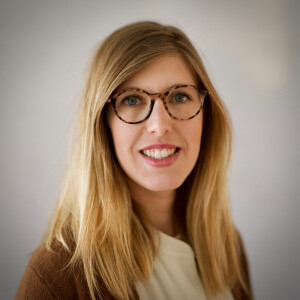
We all know what data is: bits of information of which in this age of Big Data we have lots of. You might also know what topology is: the study of shapes that considers two shapes to be the same if you can deform one into the other without tearing them or gluing things together.
But what is topological data analysis? And how might it help to understand proteins or diseases such as cancer? We find out with Heather Harrington a mathematician we met at the European Congress of Mathematics (ECM) this summer. Heather tells us how topological data analysis can produce a so-called barcode for a given data set which gives deep insights into its structure. Below are a couple of images illustrating a barcode to illustrate what we talk about in the podcast.
We attended the ECM with kind support of the London Mathematical Society (LMS). Heather gave the LMS lecture at the ECM.
You might also want to listen to more episodes of our Euromaths series which reports on the ECM.
Circles drawn around 20 points in the plane. If the radius r is less than r0, the circles are small enough to not overlap (left). Once the radius exceeds r0, but is smaller than r1, the circles overlap and together form a ring-like structure (middle). One the radius is larger than r1 the circles join up in the centre of this ring-like structure. What you see now is a single blob without a hole.
The barcode captures this information. For r < r0 there are 20 red lines indicating there are twenty connected components without holes. For r0 < r < r1 there is one green line indicating there is one connected component with one hole (the colours red and green differentiate between no hole and one hole). For r > r1 there is one red line indicating there is one connected component without a hole.
This content was produced with kind support from the London Mathematical Society.
Nov 12, 2024
Nov 12, 2024
26 min
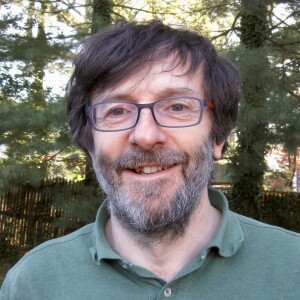
We love a game of billiards — or at least the mathematical version of it. It's a dynamical system that's just about basic enough to study but still poses lots of open questions. In this episode of Maths on the Move we talk to Giovanni Forni about chaos, periodicity and the many things we still hope to learn about billiards.
We met Giovanni at the European Congress of Mathematics (ECM) in summer this year, which we attended with kind support of the London Mathematical Society. See here for more episodes of our Euromaths series which reports on the ECM.
To find out more about mathematical billiards on Plus see
Chaos on the billiards table
Playing billiards on doughnuts
Playing billiards on strange tables
Here are a couple of academic papers by Forni and his collaborators:
Weakly Mixing Billiards, J. Chaika, G. Forni
Weak Mixing in rational billiards, F. Arana-Herrera, J. Chaika, G. Forni.
This content was produced with kind support from the London Mathematical Society.
Nov 5, 2024
Nov 5, 2024
14 min
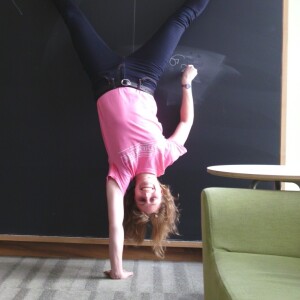
As the days in the UK get shorter and darker we continue remembering the brilliant time we had in Seville last summer at the European Congress of Mathematics (ECM). In this episode of Maths on the move we talk to one of the mathematicians we met at the ECM, Jessica Fintzen, who won a prestigious EMS Prize at the Congress.
Jessica tells us how to capture infinitely many snowflakes at the same time, the maths of symmetry and her work on representation theory, and why she likes doing handstands.
To find out a little more about Jessica's mathematics, as well as her gymnastics, see this video.
You might also like to look the following content relevant to topics discussed in the podcast:
Groups: the basics
Maths in a minute: Representing groups
This content was produced with kind support from the London Mathematical Society.
Oct 29, 2024
Oct 29, 2024
16 min
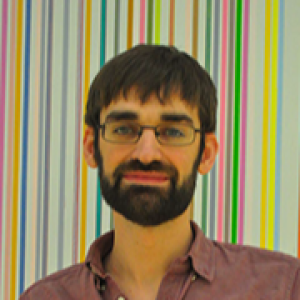
The world is full of networks. We're part of them, our infrastructure is full of them, and there are even networks within our bodies (e.g. made from neurons). This summer the mathematician Richard Montgomery won a prestigious EMS Prize at the European Congress of Mathematics (ECM) for his work on the pure maths of networks, also known as graph theory.
In this episode of Maths on the move Richard tells us about an amazing result he helped to prove to great acclaim, known as Ringel's conjecture, and why it's interesting to take graphs to the extreme.
You might also want to read this article about Richard's work. To find out more about the event at the Isaac Newton Institute in honour of Tim Gowers, which is mentioned in the podcast, see here.
This content was produced with kind support from the London Mathematical Society.
Oct 22, 2024
Oct 22, 2024
24 min
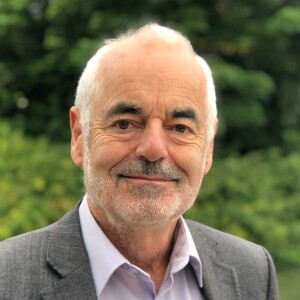
David Spiegelhalter, one of our favourite statisticians in the whole world, has a new book out. It's called The art of uncertainty: How to navigate chance, ignorance, risk and luck and published by Pelican Books.
In this episode of Maths on the Move we talk to David about the book, touching on a huge range of topics — from double yolked eggs and the bay of pigs, to why it's useful to disagree and why uncertainty is personal. Enjoy!
To find out more about some of the topics mentioned in this episode see,
When being wrong is right — on the "tell me why I'm wrong" approach
Struggling with chance — on the philosophy of probability
Freedom and physics — on randomness and free will
Oct 8, 2024
Oct 8, 2024
14 min
We recently found out why pieces of toast tend to land butter side down. It' because the physical factors at play, including the typical height of breakfast tables and the strength of the Earth's gravity, are just right to allow a piece of toast to perform one flip on its way to the floor: from butter side up to butter side down.
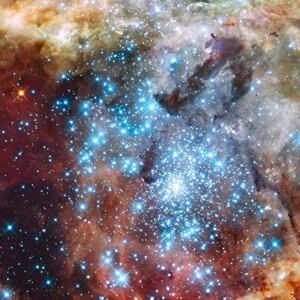
The strength of the Earth's gravity is measured by the gravitational constant g, one of the constants of nature. These constants are special not just when it comes to toast. If their values were just a tiny bit different, life as we know it couldn't exist. This begs the question of why — why are the constants fine-tuned for our existence? Some people have taken this fine-tuning as evidence of the existence of a god who wanted us to be here, but there's also another explanation: perhaps our Universe is just one of many, all with different values for the constants of nature? If such a multiverse exists, then the existence of our Universe within it is no longer surprising. It's just one of many.
All this reminded us of an interview we did in 2016 with astrophysicist Fred Adams at the FQXi international conference in Banff, Canada. In this episode of Maths on the move we bring you this interview. Adam tells us all about the multiverse and how knowledge about our own Universe can help us to calculate how many of those other universes could be similar to our own. We hope you enjoy it, but if it's too mind-boggling, have a piece of toast.
Fred Adams
Maths on the Move
Maths on the Move, the podcast from plus.maths.org, will bring you the latest news from the world of maths, plus interviews and discussions with leading mathematicians and scientists about the maths that is changing our lives. Hosted by Plus editors Rachel Thomas and Marianne Freiberger.
(Header image by FAVIO)
Maths on the Move is the podcast from Plus!
Are you curious about maths and the world? Then visit plus.maths.org to stay connected with mathematics, refresh your knowledge and keep up to date with current research! We welcome everyone into the world of mathematics, enabling curious non-experts to engage with maths concepts that arise in everyday life and raise awareness and appreciation of mathematics.
We publish articles, podcasts and videos on any aspect of mathematics, covering topics as diverse as art, medicine, cosmology and sport, and showing how recent news stories were often based on some underlying piece of maths that never made it to the newspapers. And all past content remains available online, which besides making for good browsing is, we hope, a useful resource for maths school students and teachers.
We want to encourage the next generation of mathematicians by providing diverse role models, helping to break down perceived barriers, and revealing the maths in many careers. Our focus on the mathematicians we work with, as well as on their research, brings mathematics to life, conveying the creative and dynamic nature of doing mathematics. We hope you enjoy discovering these mathematical stories!