Maths on the Move
Maths on the Move, is the podcast from plus.maths.org. We speak to researchers from the frontiers of mathematical science so you can connect with the maths that shapes and explains our world. Hosted by Plus editors Rachel Thomas and Marianne Freiberger.






Episodes
Oct 1, 2024
Oct 1, 2024
22 min
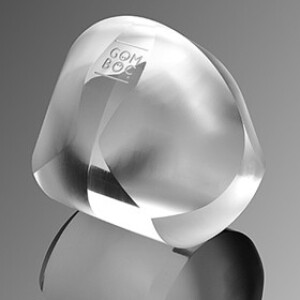
A Gömböc is a strange thing. It looks like an egg with sharp edges, and when you put it down it starts wriggling and rolling around as if it were alive. Until not so long ago no-one knew whether Gömböcs even existed. Gabor Domokos, one of their discoverers, reckons that in some sense they barely exists at all. So what are Gömböcs and what makes them special?
In this episode of Maths on the move we revisit an interview with Domokos from all the way back in 2009.
We were reminded of this interview when we thought about what makes a good mathematical story and the story of the Gömböc has it all: beautiful mathematics, an exciting discovery, a beach holiday, romance (sort of) and even turtles. We hope you enjoy it!
You can read the article that accompanies this this episode here.
Gábor Domokos
Sep 24, 2024
Sep 24, 2024
25 min
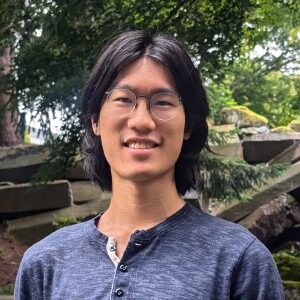
Over the summer we've been incredibly lucky to have been working with Justin Chen, a maths student at the University of Cambridge who is about to start his Masters. Justin has done some great work on how to explain the concept of a mathematical group, and group theory as a whole, to non-mathematicians. In this episode of Maths on the move he tells us how groups are collection of actions, akin to walking around on a field, and why group theory is often called the study of symmetry. He also marvels at the power of abstraction mathematics affords us, tells us about what it was like diving into the world of maths communication, and what his plans are for the future.
You can find out more about groups in the following two collections Justin has produced:
Groups: The basics
Groups: A whistle-stop tour
You might also want to read Justin's article Explaining AI with the help of philosophy mentioned at the beginning of the podcast. It is based on an interview with Hana Chockler, a professor at King's College London, conducted at a recent event organised by the Newton Gateway to Mathematics and the Alan Turing Institute.
This article was produced as part of our collaborations with the Isaac Newton Institute for Mathematical Sciences (INI) and the Newton Gateway to Mathematics.
The INI is an international research centre and our neighbour here on the University of Cambridge's maths campus. The Newton Gateway is the impact initiative of the INI, which engages with users of mathematics. You can find all the content from the collaboration here.

Sep 17, 2024
Sep 17, 2024
19 min
This summer we were very pleased to attend the European Congress of Mathematics (ECM), which took place in Seville, Spain, in July. We went to lots of fascinating talks and generally enjoyed the mathematical hustle and bustle. We also interviewed a range of interesting mathematicians about topics as diverse as mathematical billiards and topological data analysis, and we now bring you these interviews as part of our podcast.
First up is the eminent Avi Wigderson, who has won many prestigious mathematical prizes, including an Abel Prize in 2021. Avi gave a great talk at the ECM about the role of errors in mathematical proofs. Traditionally, mathematical proofs need to be absolutely waterproof and errors are anathema. But as Avi told us, if you allow a certain level of error to creep in, you can do amazing things. For example, you can construct zero knowledge proofs, which allow you to prove something without giving any information away about what you're proving. And you can construct proofs that even if they're very long, can be checked for correctness by just reading a few pages. Find out more in this episode of Maths on the move.
The photo of Avi Wigderson above is courtesy Cliff Moore/Institute for Advanced Study, Princeton, NJ USA/AbelPrize.
This content was produced with kind support from the London Mathematical Society.

Sep 10, 2024
Sep 10, 2024
27 min
Is there life elsewhere in the Universe? And how did life emerge here on Earth? These two questions are often considered separately, but answers to one shed important light on answers to the other. In their new book Is Earth exceptional: The quest for cosmic life, renowned astrophysicist Mario Livio and Nobel laureate Jack Szostak combine both these question and find fascinating answers.
In this episode of Maths on the move we talk to Livio about the new book. From creating life in the lab to searching for it on distant planets, Livio gives us a riveting whistelstop tour of research into the origin of life, here on Earth an elsewhere. Is Earth exceptional is out on September 10, 2024 in the US and on September 26, 2024 in the UK.
To get a taster of Livio's writing (which we think is very good) see a list of his Plus articles. We have also reviewed six of Livio's books:
Galileo and the science deniers
Why? What makes us curious
Brilliant blunders
Is god a mathematician?
The equation that couldn't be solved
The golden ratio

Jul 24, 2024
Jul 24, 2024
19 min
We're getting excited for the summer here but before we all head off on holidays we catch up with Marianne in Spain at the European Congress of Mathematics, and Justin and Rachel in the UK having just attended some fascinating events in London and Cambridge held by the Isaac Newton Institute of Mathematical Sciences and the Newton Gateway.
Marianne told us about her recent interview with Avi Widgerson – winner of the Abel Prize in 2021 and the most recent Turing Prize. Justin told us about how the philosophical concept of causality can help us understand AI. And Rachel tells us about the surprising phenomena of anti-diffusion and how it links the patterns we see on Juniper, staircases in our oceans and fusion reactors of the future.
We'll be back with more podcasts in the Autumn, but here are some of our recommendations for your summer reading and listening pleasure!
Articles:
How to (im)prove mathematics
Fractal photo finish
Chaos on the billiard table
Podcasts:
Tying together black holes, quantum gravity and number theory
The murmuration conjecture: finding new maths with AI
From clicks to chords
Books:
Collision – Stories from the Science of CERN
This content was produced as part of our collaborations with the London Mathematical Society, the Isaac Newton Institute for Mathematical Sciences and the Newton Gateway to Mathematics.

Jul 16, 2024
Jul 16, 2024
24 min
How we behave can have far greater impacts than just on our own daily lives. For example who we interact with and whether we get vaccinated affects how diseases spread through the community. So if we are going to use maths to try to understand such a challenge facing society, we need to make sure we include human behaviour in our mathematical models. But how do you mathematically describe the messiness of human behaviour?
To find out we talk to mathematicians Kirsty Bolton, Assistant Professor at the University of Nottingham, and Ed Hill, a Warwick Zeeman Lecturer at the University of Warwick. Kirsty and Ed organised a recent workshop bringing together experts from across maths, data science, life sciences and social sciences to explore how mathematical models can be made more realistic by including human behaviour. They tell us about both the mathematical and the communication challenges this brings, from the difficulty of learning the languages of other disciplines to the excitement of finding the sweet spot where experts from such different areas can work together to make progress.
Kirsty and Ed are both part of JUNIPER, a collaborative network of researchers from across the UK who work at the interface between mathematical modelling, infectious disease control and public health policy, and JUNIPER supported the workshop.
This podcast is part of our collaboration with JUNIPER, the Joint UNIversities Pandemic and Epidemiological Research network. JUNIPER is a collaborative network of researchers from across the UK who work at the interface between mathematical modelling, infectious disease control and public health policy. You can see more content produced with JUNIPER here.

Jun 26, 2024
Jun 26, 2024
11 min
We're very excited to be going to this year's European Congress of Mathematics (ECM), which will take place in Seville, Spain, in July! We noticed that mathematicians who win one of the prizes awarded at the ECM by the European Mathematical Society quite often go on to win a Fields Medal, one of the highest honours in mathematics.
So to celebrate the run-up to the ECM we've launched Euromaths, a miniseries of podcasts revisiting interviews with Fields Medallists who previously won an EMS prize. This week we hear from Maryna Viazovska who won a Fields Medal in 2022 and an EMS prize in 2020, talking about the theory of optimal transport and how it applies to a wide range of things, from crystals to clouds.
You can read about Maryna's work in this article. To listen to previous episodes of Euromaths click here.
This content was originally produced as part of our collaborations with the London Mathematical Society and the Isaac Newton Institute for Mathematical Sciences. You can find all our content on the 2022 International Congress of Mathematicians here.
Jun 19, 2024
Jun 19, 2024
12 min
We're very excited to be going to this year's European Congress of Mathematics (ECM), which will take place in Seville, Spain, in July! We noticed that mathematicians who win one of the prizes awarded at the ECM by the European Mathematical Society quite often go on to win a Fields Medal, one of the highest honours in mathematics.
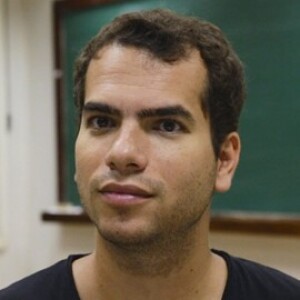
So to celebrate the run-up to the ECM we've launched Euromaths, a miniseries of podcasts revisiting interviews with Fields Medallists who previously won an EMS prize. This week we hear from Artur Avila who won a Fields Medal in 2014 and an EMS prize in 2012, talking about the theory of optimal transport and how it applies to a wide range of things, from crystals to clouds.
You can read about Artur's work in this article. To listen to previous episodes of Euromaths click here.
This content was originally produced as part of our collaboration with the London Mathematical Society. You can find all our content on the 2014 International Congress of Mathematicians here.

Jun 11, 2024
Jun 11, 2024
8 min
We're very excited to be going to this year's European Congress of Mathematics (ECM), which will take place in Seville, Spain, in July! We noticed that mathematicians who win one the prizes awarded at the ECM by the European Mathematical Society quite often go on to win a Fields Medal, one of the highest honours in mathematics.
So to celebrate the run-up to the ECM we've launched Euromaths, a miniseries of podcasts revisiting interviews with Fields Medallists who previously won an EMS prize. This week we hear from Alessio Figalli who won a Fields Medal in 2018 and an EMS prize in 2012, talking about the theory of optimal transport and how it applies to a wide range of things, from crystals to clouds.
You can read about Alessio's work in this article. To listen to previous episodes of Euromaths click here.
This content was originally produced as part of our collaborations with the London Mathematical Society and the Isaac Newton Institute for Mathematical Sciences. You can find all our content on the 2018 International Congress of Mathematicians here.
Jun 4, 2024
Jun 4, 2024
16 min
We're very excited to be going to this year's European Congress of Mathematics (ECM), which will take place in Seville, Spain, in July! And we noticed that mathematicians who win one the prizes awarded at the ECM by the European Mathematical Society quite often go on to win a Fields Medal, one of the highest honours in mathematics.
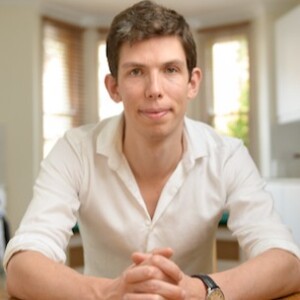
So to celebrate the run-up to the ECM we've launched Euromaths, a miniseries of podcasts revisiting interviews with Fields Medallists who previously won an EMS prize. This week we hear from James Maynard who won a Fields Medal in 2022 and an EMS prize in 2016, talking about is work on the fabled twin prime conjecture.
You can read about James's work in this short introduction and this in-depth article.
Click here to listen to last week's episode of Euromaths featuring Fields Medallist Hugo Duminil-Copin.
This content was originally produced as part of our collaborations with the London Mathematical Society and the Isaac Newton Institute for Mathematical Sciences. You can find all our content on the 2022 International Congress of Mathematicians here.
Maths on the Move
Maths on the Move, the podcast from plus.maths.org, will bring you the latest news from the world of maths, plus interviews and discussions with leading mathematicians and scientists about the maths that is changing our lives. Hosted by Plus editors Rachel Thomas and Marianne Freiberger.
(Header image by FAVIO)
Maths on the Move is the podcast from Plus!
Are you curious about maths and the world? Then visit plus.maths.org to stay connected with mathematics, refresh your knowledge and keep up to date with current research! We welcome everyone into the world of mathematics, enabling curious non-experts to engage with maths concepts that arise in everyday life and raise awareness and appreciation of mathematics.
We publish articles, podcasts and videos on any aspect of mathematics, covering topics as diverse as art, medicine, cosmology and sport, and showing how recent news stories were often based on some underlying piece of maths that never made it to the newspapers. And all past content remains available online, which besides making for good browsing is, we hope, a useful resource for maths school students and teachers.
We want to encourage the next generation of mathematicians by providing diverse role models, helping to break down perceived barriers, and revealing the maths in many careers. Our focus on the mathematicians we work with, as well as on their research, brings mathematics to life, conveying the creative and dynamic nature of doing mathematics. We hope you enjoy discovering these mathematical stories!