Maths on the Move
Maths on the Move, is the podcast from plus.maths.org. We speak to researchers from the frontiers of mathematical science so you can connect with the maths that shapes and explains our world. Hosted by Plus editors Rachel Thomas and Marianne Freiberger.






Episodes

Mar 5, 2024
Mar 5, 2024
27 min
Could we make the clouds brighter so they reflect more of the Sun's warming rays back into space to keep us cooler? Or make Arctic ice thicker so it lasts longer over the summer? These ideas might sound slightly fantastical, but they're active research areas at the Centre for Climate Repair which has recently become our neighbour here at the Centre for Mathematical Sciences at the University of Cambridge.
In this episode of Maths on the move the Centre's Director of Research, Shaun Fitzgerald, tells us more about the Centre's work and its three-fold mission: to reduce emissions of greenhouse gases, to remove excess green house gases from the atmosphere, and to refreeze the Arctic.
You may also want to read the article accompanying this episode of Maths on the move. For more about mathematics and climate change, see here.

Dec 12, 2023
Dec 12, 2023
25 min
In this, the last episode of Maths on the move for this year, we look back on 2023 and forward to 2024. We talk about some highlights in our coverage of this year's mathematics, and some of the exciting things to come next year. It's a crazy journey featuring breakthroughs in pure maths, the maths of music and Ed Sheeran, renewable energy sources, the maths of justice, and the epidemiology of climate change.
We hope you enjoy this final episode of the year and wish you all the best for next year! And remember: no matter how hard a piece of mathematics might be, there's always something in it that everyone can relate to!
To find out more about the topics mentioned in this episode see
Fermat's last theoem
Telescope topology
From clicks to chords, the article and the the podcast
Creating a low carbon energy network
A 60% chance of rain: our podcast episode featuring climate scientist Tim Palmer
Climate change and ready meals: Challenges for epidemiologists
To find out more about our collaboration with the Isaac Newton Institute see here, about our collaboration with the JUNIPER network see here, and about our collaboration with Maths4DL see here.
Dec 5, 2023
Dec 5, 2023
25 min
To help mitigate climate change the UK government has pledged to decarbonised UK electricity supply by 2035. That's a huge science and engineering challenge on a very tight deadline. In this episode we talk to two people who know all about the challenges involved: Chris Dent, Professor of Industrial Mathematics, and Lars Schewe, Reader in Operational Research, both of the University of Edinburgh. Both helped to organise an intensive two week "deep dive" workshop on the Mathematics and statistics for low carbon energy systems earlier this year as part of a longer research programme at the Isaac Newton Institute for Mathematical Sciences (INI) in Cambridge.
Chris and Lars tell us why decarbonising the energy network also resents huge mathematical challenges — and why the effort isn't unlike the Apollo mission that got people to the Moon in the 1960s.
You can read more about the topic discussed in this episode in this article.
This content was produced as part of our collaboration with the Isaac Newton Institute for Mathematical Sciences (INI) – you can find all the content from the collaboration here.
The INI is an international research centre and our neighbour here on the University of Cambridge's maths campus. It attracts leading mathematical scientists from all over the world, and is open to all. Visit www.newton.ac.uk to find out more.

Nov 28, 2023
Nov 28, 2023
22 min
We continue our series about bringing maths to the stage and screen by going back to 2012 when we were lucky enough to host the UK premiere of the Travelling Salesman, here at the Centre for Mathematical Sciences, our home. It is an unusual movie: despite almost every character being a mathematician there's not a mad person in sight. Moreover, the plot centres on one of the greatest unsolved problems in mathematics, does P = NP? Timothy Lanzone, the writer and director, tells us about creating drama from mathematics, and we discuss the maths behind the movie.
(The sound effects used in this podcast are by jlozano and nemoDaedalus.)
You can read more about the travelling salesman problem, P versus NP, and cryptography on plus.maths.org
Nov 21, 2023
Nov 21, 2023
30 min
When you think of Alan Turing you might think of his work breaking the Enigma code in World War II. Or you might think of his work that helped build the foundations of computer science and mathematical logic. Or you might even think of his groundbreaking work in mathematical biology on morphogensis which helps explain animal patterns.
One thing we hadn't thought of, until 2013 that is, was that he could be the emotional centerpoint of a musical. The universal machine is a musical about Alan Turing's life and work that was staged in London in 2013. As part of our series about putting maths on stage and screen, we revisit our 2013 interview with the writer and director David Byrne, actor Richard Delaney, who played Turing, and assistant director Natalie York, to find out how you turn such a story, and the maths in it, into a musical.
We are very grateful to Dominic Brennan, who wrote the music for The universal machine, for giving us permission to use the track Building The Bombe Part Two from the show.
The universal machine poster detail.
For more information:
You can read the original article accompanying this podcast and a review of The universal machine;
You can find out more about the Enigma code and how it was cracked in Exploring the Enigma;
You can read about morphogenesis in How the leopard got its spots;
And there is more on Turing and his work in Alan Turing: ahead of his time and What computers can't do. These two articles also look at the halting problem which is related to the Entscheidungsproblem mentioned in the podcast.

Nov 14, 2023
Nov 14, 2023
25 min
This is the second part of our mini series focussing on mathematics coming to life on stage and in film. We revisit our 2008 interview with mathematician and actor Victoria Gould and mathematician Marcus Du Sautoy, who were both involved in the development of the play A disappearing number produced by Complicité. The play explores the fascinating collaboration between the mathematicians GH Hardy and Srinivasa Ramanujan. Find out how theatre can embody, not just the story of the people involved, but also the mathematics itself.
You can also read about A disappearing number in this article. To find out more about Victoria Gould's career as an actor and mathematician, see this article or listen to last week's episode of Maths on the move.

Nov 7, 2023
Nov 7, 2023
22 min
In the summer we came across news coverage claiming that scientist were on the verge of discovering a fundamental force of nature they hadn't previously known about. This would be a fifth force, in addition to gravity, electromagnetism, and the strong and weak nuclear forces.
Such a discovery would be quite a revolution, so we went to talk to our friend Ben Allanach, Professor of Theoretical Physics at the University of Cambridge, to find out more. Ben explained the science, gave us his personal hunch regarding the experimental results, and provided a fascinating glimpse into life at the cutting edge of physics.
Ben Allanach
To find out more about the topics explored in this podcast, see The physics of elementary particles and A brief introduction to quantum field theory. Click here to see all our content featuring Ben Allanach.
Nov 7, 2023
Nov 7, 2023
21 min
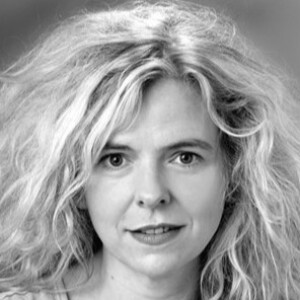
Victoria Gould has always known she would be an actor, and went straight from studying arts at school to running her own theatre company. But she eventually had to come clean about her guilty secret - she loves maths - and has since managed to combine a career as a research mathematician and teacher with a successful acting career on television and in theatre. For this episode of Maths on the move, which was recorded in 2008, Victoria told us what it's like being an actor and a mathematician and how those two, at first sight very different, areas overlap.
You can also read the article accompanying this podcast, and find out more about the play A disappearing number here.
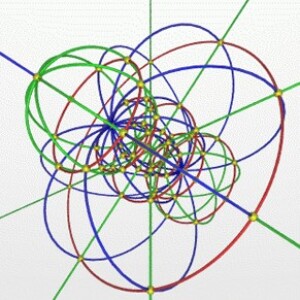
We were inspired to revisit this episode when we met mathematical film maker Ekaterina Eremenko at this year's Heidelberg Laureate Forum. Eremenko's latest film, Solving the Bonnet problem, really gets across that mathematics is a dynamic, and sometimes dramatic, pursuit that can be well suited for the stage and screen. You can watch the trailer here.
Oct 24, 2023
Oct 24, 2023
18 min
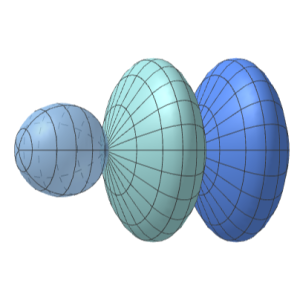
How many dimensions are there? We might not be aware, but we are actually used to living in a curved, multidimensional Universe. In this episode theoretical physicist David Berman explains how, and he also dives into the world of string theory which predicts that the Universe has ten dimensions, some of which are hidden from our view. We first published this episode back in 2012, as part of our Science fiction, science fact project.
David Berman
You can also read the articles that accompany this podcast: Kaluza, Klein and their story of a fifth dimension and The ten dimensions of string theory.
Oct 17, 2023
Oct 17, 2023
32 min
n this podcast we bring you breaking news from the world of topology! Four mathematicians, all in earlier stages of their career, have resolved the long-standing telescope conjecture which explores holes in spheres – of any dimension!
The result was announced this summer at a conference organised by Isaac Newton Institute for Mathematical Sciences in Cambridge (INI).
We talk to two of these mathematicians, Tomer Schlank and Jeremy Hahn, to get a gist of this high-powered result in pure mathematics, which is nevertheless wonderfully intuitive. So fasten your seatbelt and join us on a trip into the wonderful world of homotopy theory!
Jeremy Hahn Tomer Schlank
To read an article exploring the telescope conjecture and for some background reading, see here.
This content was produced as part of our collaboration with the Isaac Newton Institute for Mathematical Sciences (INI). The INI is an international research centre in Cambridge which attracts leading mathematicians from all over the world. You can find all the content from the collaboration here.
Maths on the Move
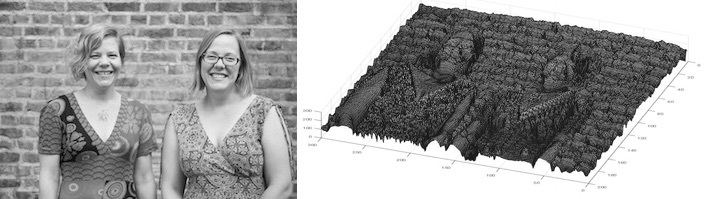
Maths on the Move, the podcast from plus.maths.org, will bring you the latest news from the world of maths, plus interviews and discussions with leading mathematicians and scientists about the maths that is changing our lives. Hosted by Plus editors Rachel Thomas and Marianne Freiberger.
(Header image by FAVIO)
Maths on the Move is the podcast from Plus!
Are you curious about maths and the world? Then visit plus.maths.org to stay connected with mathematics, refresh your knowledge and keep up to date with current research! We welcome everyone into the world of mathematics, enabling curious non-experts to engage with maths concepts that arise in everyday life and raise awareness and appreciation of mathematics.
We publish articles, podcasts and videos on any aspect of mathematics, covering topics as diverse as art, medicine, cosmology and sport, and showing how recent news stories were often based on some underlying piece of maths that never made it to the newspapers. And all past content remains available online, which besides making for good browsing is, we hope, a useful resource for maths school students and teachers.
We want to encourage the next generation of mathematicians by providing diverse role models, helping to break down perceived barriers, and revealing the maths in many careers. Our focus on the mathematicians we work with, as well as on their research, brings mathematics to life, conveying the creative and dynamic nature of doing mathematics. We hope you enjoy discovering these mathematical stories!